
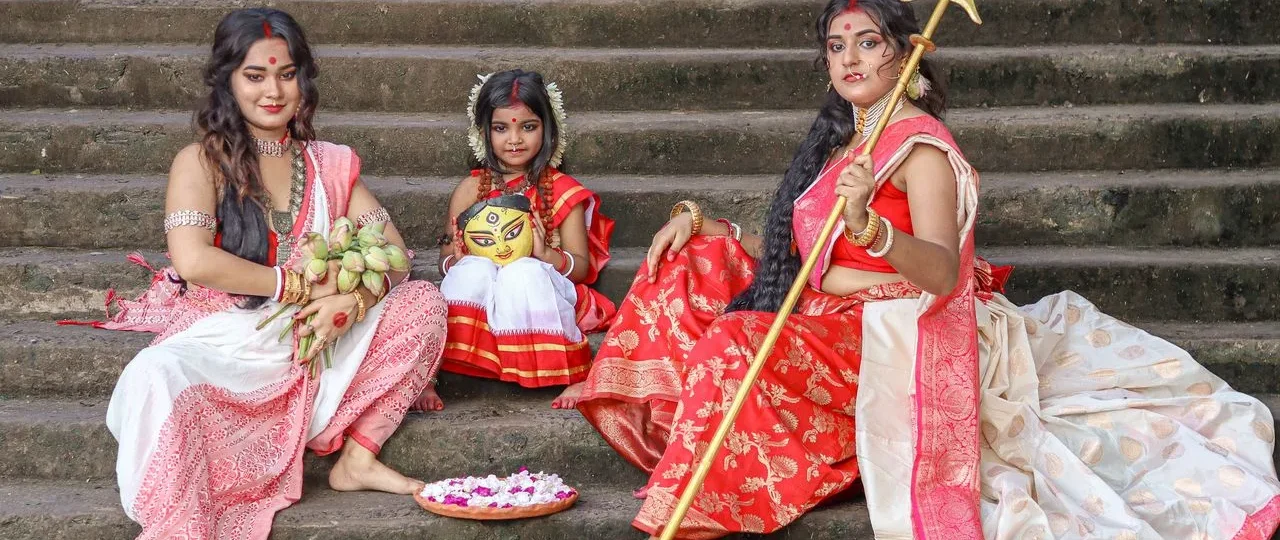
Durga Puja 2026: Where to Stay Near Kolkata’s Best Pandals Near Park Street
There are five days every October when Kolkata stops being a city and becomes something else entirely. The streets belong to the dhakis. The night belongs to the pandals. And the question every visitor asks — where do I stay to be in the middle of all of it — has one answer that has been near Park Street since 1905.
Durga Puja in Kolkata is not a festival you observe. It is an experience you are absorbed into. UNESCO recognised this in 2021 when it inscribed Durga Puja in Kolkata as an Intangible Cultural Heritage of Humanity — acknowledging what every Bengali already knew: that these five days in October are among the most extraordinary cultural events on the planet.
In 2026, Durga Puja falls across an unusually favourable weekend stretch — Shashthi on a Friday, Saptami on a Saturday, creating the ideal conditions for pandal-hopping from the first night of the festival without office constraints. The city will be out in full force from the evening of 16 October, and the streets will not truly sleep again until after Dashami immersion on 20–21 October.
For visitors planning to experience Durga Puja 2026 — whether for the first time or the fifteenth — choosing where to stay in Kolkata is the single decision that shapes every other part of the experience. This guide explains why staying on Park Street, specifically at The Astor Kolkata, is the answer that turns a visit to Durga Puja into a genuinely immersive one.
THE FESTIVAL
Durga Puja 2026 — Complete Dates, Rituals & What to Expect
Durga Puja follows the Hindu lunar calendar. In 2026, the dates and their significance are as follows:
10 October (Friday) Mahalaya — The Goddess descends. At dawn, All India Radio broadcasts Mahishasur Mardini — the devotional music that Kolkata has woken to on Mahalaya morning for generations. Artisans perform Chokkhudaan: painting the eyes of the Durga idol for the first time. The festival has not yet begun — but Kolkata has already changed.
16 October (Friday) Shashthi — Bodhon — the formal awakening of the Goddess. The pandals open. The dhak drums begin. Park Street sees the first surge of pandal-hoppers straight from office. This is the year’s best evening to begin — the crowds are present but not yet at their peak, and the first light of the decorated pandals has a freshness that Saturday and Sunday cannot replicate.
17 October (Saturday) Saptami — Kola Bou ritual: the banana plant bride is bathed in the river at dawn — the formal invocation of nature. By mid-morning, the pandals are in full swing and the city is moving entirely on festival time. The 2026 weekend advantage: Saptami on Saturday means all-night pandal-hopping is possible for the masses without a Monday constraint. Expect the highest single-night crowd of the festival on Saptami night.
18 October (Sunday) Ashtami — The holiest day. Pushpanjali — the offering of flowers to the Goddess, performed by devotees across every pandal in the city simultaneously in the morning. Kumari Puja — the worship of a young girl as a living embodiment of Devi Durga. Sandhi Puja occurs precisely at the transition between Ashtami and Navami: 108 lamps are lit, the drums reach their most intense, and the atmosphere across the city becomes electric.
19 October (Monday) Navami — Maha Aarti. The final full day of worship before farewell. The community feast — bhog — is prepared and shared at pandals across the city. Street food reaches its peak density around Park Street and the central corridor. This is the evening for the long pandal-hopping route: Mohammad Ali Park, College Square, Santosh Mitra Square, and back through the illuminated streets to Park Street.
20–21 October (Tue–Wed) Vijayadashami / Dashami — Sindoor Khela — married women smear sindoor on the Goddess and on each other in a joyful, emotional farewell ceremony. The idol immersion processions begin: thousands of Durga idols, some six storeys tall, are carried through the streets with drummers, dancers, and weeping devotees to the ghats for Visarjan in the Hooghly. The farewell phrase of Durga Puja — ‘Asche bochor abar hobe’ (We will meet again next year) — is said millions of times across the city.
“Durga Puja 2026 is an Explorer’s Dream. Shashthi is a Friday — meaning the first night of full pandal celebrations goes straight into a Saturday with no early morning work constraints. The 2026 schedule is one of the best possible calendar alignments for pandal-hopping.” — Kolkata Tales, February 2026
THE PANDALS
The Best Durga Puja Pandals Near Park Street & Central Kolkata — 2026
Kolkata has over 3,000 registered Durga Puja pandals across the city. The question for any pandal-hopper is not whether to go, but which ones and in what order. For guests staying on Park Street at The Astor Kolkata, the central location puts the city’s most significant cluster of accessible pandals within reach by foot, metro, or a short cab ride.
Here is a curated guide to the pandals reachable from Park Street, organised by proximity:
Walking Distance from The Astor — The Park Street / Central Cluster
These pandals are within 1–3 km of Hotel The Astor Kolkata on Shakespeare Sarani and can be reached on foot during the festival, when traffic makes cabs impractical in any case.
- Mohammad Ali Park (MG Road / Esplanade — 15-minute walk) — One of Central Kolkata’s most celebrated pandals, established in 1969. Known year after year for innovative architectural replicas of monuments and heritage sites. The park setting gives the pandal a grand scale that smaller locations cannot match. On Saptami and Ashtami nights, the crowds here are enormous — arrive before 9 PM for the best access.
- College Square (53 College Street — 20-minute walk or 10-min metro) — Established in 1948 beside the iconic College Square lake, this pandal has a unique visual signature: the elaborately decorated idol and pandal are reflected in the lake’s surface, creating a mirror image that photographers travel specifically to capture. Best visited after 10 PM when the reflections are at their most dramatic. One of Kolkata’s genuinely unmissable pandal experiences.
- Santosh Mitra Square (Lebutala) (Lebutala, off MG Road — 25-minute walk or metro) — Consistently cited as one of the most expensive and ambitious pandals in Kolkata, and frequently one of the most innovative. Santosh Mitra Square is known for topical themes, spectacular scale, and the kind of crowd-drawing setups that generate citywide conversation before the festival has even begun. On Navami night, the queue here can take 60–90 minutes — factor this into your evening route.
Short Cab or Metro — South Kolkata Pandals
South Kolkata’s broader streets and open park spaces accommodate Kolkata’s grandest pandals — the ones with the tallest idols, the most elaborate themes, and the greatest technical ambition. These are 20–40 minutes from Park Street by cab (significantly longer during peak festival hours — metro is strongly recommended).
- Ekdalia Evergreen Club (Ekdalia Road, Golpark — 25 min by cab / 20 min by metro) — Established in 1943, Ekdalia Evergreen is legendary for its annual recreation of famous temples from across India. The scale of the structural work is extraordinary, and the idol itself — traditionally styled — creates a specific contrast with the architectural grandeur of the pandal around it. Consistently appears on every “must-visit” list for Durga Puja in Kolkata.
- Deshapriya Park (Deshapriya Park, South Kolkata — 30 min by cab or metro) — Famous for having hosted one of the tallest Durga Puja idols in history and for spectacular annual themes. The open park setting means the crowd is more dispersed than at enclosed lane pandals, making the experience more comfortable. The light installations here tend to be among the most elaborate in the city.
- Jodhpur Park Sarbojanin (Jodhpur Park, near Jadavpur — 35 min by cab) — A classic South Kolkata family puja with consistently excellent decoration, strong cultural programming, and a food bazaar that is worth visiting in its own right. Less overwhelming in crowd density than the mega-pandals further north, making it a good option for late-morning visits on Ashtami or Navami.
- Sreebhumi Sporting Club (Canal Street, Lake Town — 30 min by cab) — In recent years, Sreebhumi has become one of the most talked-about pandals in Kolkata for its cinematic scale and international landmark themes — recreating structures including temples, palaces, and international monuments at full architectural ambition. Celebrity appearances, massive crowds, and the kind of spectacle that generates national media coverage. Visit early in the festival on Shashthi night when crowds are most manageable.
The North Kolkata Heritage Circuit
North Kolkata’s Durga Puja is the counterpoint to the south’s grand spectacle — narrower lanes, older pandals, more traditional idols, and the specific intimacy that comes from celebrating in a neighbourhood rather than a stadium. This circuit is best experienced on foot.
- Bagbazar Sarbojanin (Bagbazar, North Kolkata — 30 min by cab / 20 min by metro) — Established over a century ago, Bagbazar is the pandal that defines the word ‘sabekiyana’ — old-style, traditional, devotional. The idol here is classical. The setting beside the Hooghly River is extraordinary, particularly at dawn during the Kola Bou ritual on Saptami morning. This is the pandal for those who want to understand Durga Puja before Kolkata made it into art.
- Kumartuli Park (Near Bagbazar, North Kolkata) — Established in 1995, Kumartuli Park is directly adjacent to the potters’ quarter where all the Durga idols are made. The pandal itself is consistently innovative and award-winning, making it the only place in Kolkata where you can visit both the workshop where the craft was born and a pandal that exemplifies where it has arrived. Best combined with a pre-festival visit to Kumartuli itself to watch the final days of idol preparation.
- Sovabazar Rajbari (Sovabazar, North Kolkata) — A bonedi bari puja — a heritage household puja in one of Kolkata’s oldest aristocratic family homes. Raja Nabakrishna Deb first hosted this puja in 1757. The rajbari setting, the traditional rituals unchanged for over two centuries, and the absence of the commercial pandal atmosphere make this the most historically resonant Durga Puja experience available in the city.
Metro tip for pandal-hopping: The Kolkata Metro is the only reliable transport during Durga Puja. Cabs and autos are stuck in traffic from Shashthi evening onwards. The metro runs extended hours during the festival — the East-West Metro (Purple Line) and the North-South Line (Blue Line) between them cover Park Street, MG Road, Esplanade, Maidan, Kalighat, and Tollygunge — the spine of the city’s pandal circuit.
THE PLAN
Day-by-Day Pandal-Hopping Itinerary from Park Street — Durga Puja 2026
Based on The Astor Kolkata’s location on Shakespeare Sarani, here is a practical five-day itinerary for experiencing Durga Puja 2026 from Park Street:
Day 1 — Shashthi Evening (16 October, Friday)
The festival’s first night. Start at The Astor’s Deck88 outdoor café for sunset drinks as the city begins to come alive. Walk to Mohammad Ali Park for the first pandal of the festival when the crowds are just arriving. Continue to Santosh Mitra Square — best experienced early in the festival before the queue extends to an hour. Return to Park Street for dinner at Kebab-e-que. Walk the illuminated Park Street — the entire street is decorated for Durga Puja and the atmosphere tonight is unlike any other night of the year.
Day 2 — Saptami (17 October, Saturday)
Dawn: Kola Bou at Bagbazar (take a cab to the Hooghly ghat before 6 AM for the banana plant bathing ritual). Return for breakfast at The Astor. Morning rest — Saptami night will be the longest of the festival.
Evening: Begin pandal-hopping at 7 PM from College Square (for the lake reflections) → Mohammad Ali Park → Santosh Mitra Square → Park Street itself for food and the street atmosphere. This is the biggest night — the entire city is out. Expect to be back after midnight.
Day 3 — Ashtami (18 October, Sunday)
Morning: Pushpanjali at 9–10 AM — attend at a local neighbourhood pandal near The Astor, where the flower-offering ceremony is performed en masse and the devotional atmosphere is overwhelming. Return for lunch.
Afternoon: Visit Kumartuli to see the craft of the idol-makers in their own quarter before the final days.
Night: Sandhi Puja is the moment between Ashtami and Navami — typically around 10–11 PM depending on the exact astronomical calculation. The 108 lamps, the intensified drums, and the collective energy across every pandal in the city simultaneously is the festival’s most electric moment. Be at a pandal for this.
Day 4 — Navami (19 October, Monday)
This is the day for South Kolkata. Take the metro to Tollygunge in the morning and work north: Jodhpur Park → Ekdalia Evergreen → Deshapriya Park.
Evening food walk: The street food around Park Street, New Market, and the Esplanade area is at its absolute peak on Navami evening. Mutton rolls, phuchka, jhalmuri, mishti doi, rabri, and the specific warmth of Kolkata adda — sitting and talking with strangers and friends at food stalls — is the evening’s programme.
Day 5 — Dashami & Sindoor Khela (20–21 October)
Morning: Sindoor Khela at a local pandal — married women smear sindoor on the Goddess and on each other before the immersion procession. One of the most joyful, emotional, and visually extraordinary ceremonies of the festival.
Afternoon/Evening: The Visarjan processions begin — Durga idols carried through the streets to the ghats. The sound of the dhak, the chanting, the drums, and the specific grief of farewell that runs through the procession is unlike any other festival moment in India. The Hooghly ghats at sunset on Dashami are one of the great spectacles of Indian cultural life.
After Visarjan: Return to The Astor. The city falls quiet in a way it has not been for five days. Phoenix Club — The Astor’s nightlife venue — is open until 4 AM for those who want to extend the celebration.
LOCATION STRATEGY
Why Park Street Is the Only Base for Durga Puja 2026 That Makes Sense
During Durga Puja, the geography of Kolkata changes. Cabs cannot move. Traffic is redirected. Streets are barricaded. The city operates on foot and metro. In this environment, where you stay determines everything about what you can experience — and how much of the festival is logistics versus celebration.
| Area | Distance to Mohammad Ali Park | Distance to College Square | Metro Access | Street food / Festival atmosphere |
| Park Street (The Astor) | 15-min walk | 20-min walk or metro | MG Road & Park Street stations on Blue Line | Exceptional — Park Street is a festival destination itself |
| Salt Lake / New Town | 45+ min | 40+ min | Limited metro coverage | Minimal — suburban, not central |
| Rajarhat / Airport Area | 60+ min | 55+ min | Very limited | None — far from city life |
| Alipore | 30 min | 30 min | Moderate | Good — close to South Kolkata circuit |
| BaguIati / Lake Town | 40+ min | 35+ min | Moderate | Moderate |
The Park Street advantage is not proximity to any single pandal. It is centrality — the ability to reach the Mohammad Ali Park / College Square / Santosh Mitra Square central cluster on foot in the evenings when cabs are stuck, and to reach South Kolkata and North Kolkata by metro within 20–30 minutes. No other location in Kolkata offers this combination.
Park Street also has its own festival character during Durga Puja that no other street in the city can replicate. The illuminations, the food stalls, the crowds, the music from every cafe and restaurant on the street — Park Street at 11 PM on Ashtami is one of the defining Durga Puja experiences of Kolkata, entirely separate from any individual pandal.
YOUR BASE
The Astor Kolkata — 120 Years on Park Street, Ready for Durga Puja 2026
The Astor Kolkata was built in 1905 — on the street that became the social heart of modern Kolkata, in the neighbourhood that has hosted Durga Puja celebrations for as long as the city has had them. It is, in the most literal sense, a heritage hotel in Kolkata that has been part of the Park Street festival experience for over a century.
Why The Astor Is the Right Hotel for Durga Puja 2026
- Location: 15 Shakespeare Sarani, Park Street — centrally positioned for the walking pandal circuit, one metro stop from MG Road and the Mohammad Ali Park cluster, and on the street that becomes a festival destination in its own right during Durga Puja.
- Heritage character: A 4-star heritage boutique hotel built in 1905, restored in 2012 by Archer Hospitality. The building carries the weight of Kolkata’s history in a way that purpose-built hotels never can. Staying here during Durga Puja is staying in a building that has been part of the festival’s Park Street setting for generations.
- Four dining and nightlife venues: During Durga Puja, when the city’s restaurants fill to capacity and queues extend onto the street, having four in-house options — Kebab-e-que (all-day dining, midnight), Deck88 (outdoor café-bar), Phoenix (club, 4 AM), and Cheers (24-hour pub) — removes one of the most common festival frustrations entirely.
- 24-hour Cheers pub: During Durga Puja, guests return from pandal-hopping at all hours of the night. Cheers — The Astor’s 24-hour Victorian pub — means there is always somewhere to decompress, eat, and drink when you return from the streets at 2 AM.
- Phoenix Club until 4 AM: Durga Puja’s nightlife does not end at midnight. Phoenix — consistently rated Kolkata’s top entertainment venue — keeps the celebration going until 4 AM, making The Astor the only hotel on Park Street where the pandal-hopping and the afterparty happen in the same building.
- Rooms with the right recovery environment: Five days of pandal-hopping, sleepless Saptami nights, and the physical and emotional intensity of Dashami require rooms designed for genuine rest. The Astor’s Heritage Suite, Premium Rooms, and Family/Royal Suites are the right environment to recover between festival sessions.
Booking for Durga Puja 2026
Hotel rooms in Kolkata during Durga Puja book out months in advance. The most sought-after properties on Park Street — particularly those with the combination of heritage character, central location, and in-house dining and nightlife — are typically fully booked by August for the October festival dates.
The Astor Kolkata’s current availability for 16–21 October 2026 should be confirmed directly and immediately. Heritage rooms and the Family/Royal Suite are the categories that book first.
PRACTICAL GUIDE
Everything You Need to Know Before You Go — Durga Puja 2026 Kolkata
Transport During Durga Puja
- Metro: The only reliable transport. Blue Line (North-South) covers Park Street, MG Road, Esplanade, Maidan, and all South Kolkata pandal stops. The metro runs extended hours during the festival — check the KMRC schedule published in September.
- Foot: The primary mode. Most Park Street to central pandal routes are walkable in 15–25 minutes. Wear comfortable, broken-in shoes. You will cover 8–15 km per night.
- Cabs: App-based cabs (Ola, Uber) are near-impossible during peak festival hours (7 PM–2 AM). Surge pricing is severe. Use exclusively for early morning or midday trips when traffic permits.
- Auto-rickshaws: Not permitted in the inner city areas during peak festival hours. Available for peripheral routes.
What to Wear
- New clothes are traditional on every day of Durga Puja — many visitors and locals purchase at least one set of new Bengali-style clothing for the occasion
- Cotton and linen for the October heat and humidity — temperatures in Kolkata in October range from 24°C to 33°C
- Comfortable shoes — not new shoes on your first night of heavy walking
- A small crossbody bag — backpacks are impractical in dense crowds
What to Eat
- Bhog: The community feast served at pandals — khichuri, labra (mixed vegetable), payesh (sweet rice), and begun bhaja. Free to devotees at most pandals.
- Park Street food stalls: Mutton kathi rolls, phuchka, jhalmuri, mochar chop, mishti doi, jalebi, and rabri available from the dozens of stalls that appear on Park Street from Shashthi evening.
- Kolkata’s restaurants: Leopold-equivalent cafes on Park Street stay open late. Book in advance if you want a table — the walk-in queues during Durga Puja are 45–90 minutes at popular restaurants.
- The Astor in-house: Kebab-e-que (midnight), Deck88 (outdoor, midnight), Cheers (24 hours) — available throughout the festival for in-hotel dining at any hour.
Crowd and Safety
- Follow barricade routes at major pandals — they are designed for crowd safety and are the fastest way through
- Peak crowd times: Saptami night (Saturday 17 October), Sandhi Puja transition (Sunday 18 October night), Navami evening (19 October)
- Early morning visits (6–9 AM) to any pandal provide the best access and photography conditions
- Keep valuables in a front-facing bag or hotel safe during night pandal-hopping
FAQ
Frequently Asked Questions — Durga Puja 2026 & Staying at The Astor
1. When is Durga Puja 2026 in Kolkata?
Durga Puja 2026 runs from Shashthi on 16 October to Vijayadashami on 20–21 October 2026. Mahalaya — the Goddess’s awakening — falls on 10 October 2026. The main festival period for pandal-hopping is 16–21 October. The 2026 calendar is particularly favourable because Shashthi falls on a Friday and Saptami on a Saturday.
2. Is The Astor Kolkata a heritage hotel on Park Street?
Yes. The Astor Kolkata is a 4-star heritage boutique hotel built in 1905 and located at 15 Shakespeare Sarani, Park Street — one of the oldest continuously operating hotels in Kolkata. It was restored in 2012 by Archer Hospitality, preserving the heritage character while updating facilities. It is consistently regarded as one of the best heritage hotels in Kolkata and one of the best boutique hotels in the Park Street area.
3. Why is Park Street the best area to stay for Durga Puja?
Park Street’s central location makes it the most strategically positioned base for Durga Puja in Kolkata. It is within walking distance of the Mohammad Ali Park and College Square pandals (the most accessible central cluster), one metro stop from MG Road and Esplanade, and on the street that itself transforms into one of Kolkata’s most festive destinations during Durga Puja. The combination of pandal access, metro connectivity, and Park Street’s own festival atmosphere is unmatched anywhere else in the city.
4. Which pandals are near Park Street during Durga Puja?
The closest pandals to Park Street (Shakespeare Sarani area) are: Mohammad Ali Park (15-minute walk via MG Road), College Square (20 minutes walk or 2 metro stops), and Santosh Mitra Square / Lebutala (25 minutes walk). The Esplanade cluster of community pandals is 10–15 minutes on foot. South Kolkata pandals (Ekdalia, Deshapriya, Jodhpur Park) are 20–30 minutes by metro.
5. Does The Astor Kolkata have 24-hour dining during Durga Puja?
Yes. Cheers, The Astor’s Victorian pub, is open 24 hours — making it one of the few venues in the Park Street area where guests can eat and drink at any hour after returning from late-night pandal-hopping. Kebab-e-que (all-day dining) is open until midnight. In-room dining is also available through the night.
6. When should I book The Astor for Durga Puja 2026?
Immediately. Heritage hotels in the Park Street area book out for Durga Puja months in advance. The Astor’s Heritage Suite, Family/Royal Suite, and Premium Rooms are the first to fill. Booking by August 2026 at the latest is strongly recommended for the 16–21 October festival window.
7. Is it safe to pandal-hop at night in Kolkata during Durga Puja?
Yes. Durga Puja is one of the safest public events in India — a massive, well-policed, family-dominated festival where the streets are full of people of all ages from dusk until dawn. Standard precautions apply (valuables in front-facing bag, stay with the crowd flow, follow barricade routes), but the festival environment is generally very safe for solo travellers, women, and families.
THE INVITATION
Five Days. Three Thousand Pandals. One Street to Come Home To.
Durga Puja in Kolkata is the kind of experience that people describe, years later, as the thing that changed what they thought a festival could be. The scale of it. The artistry. The devotion and the carnival existing simultaneously in the same space. The way an entire city of fourteen million people agrees, for five days, that nothing else matters.
The Astor Kolkata has been on Park Street since 1905. It has been part of 120 Durga Puja celebrations. It will be part of the 2026 one — with four venues open for every hour of the festival, 120-year-old walls that carry the weight of every October that came before this one, and a central Park Street location that puts the entire festival within walking distance.
Durga Puja 2026 is five days in October. Book your room now.